William Chester Minor murder trial
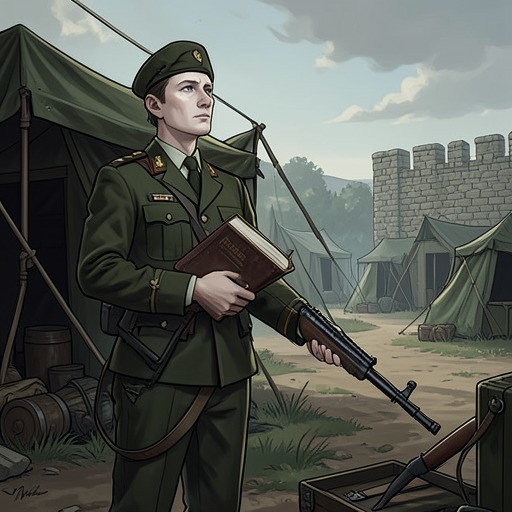
The Surgeon of CrowthorneThe William Chester Minor murder trial was the legal reckoning for the killing of George Merrett and the turning point that placed Minor in long-term custody. At Kingston Assizes in April 1872, the court heard evidence of the delusions that had shaped Minor’s conduct, applied the M'Naghten Rules, and found him not guilty by reason of insanity. The verdict did not erase the killing: it set the terms of his confinement, while the later literary fame of his dictionary work came to stand in stark contrast with the obscurity of his victim.
Background and the case before the court
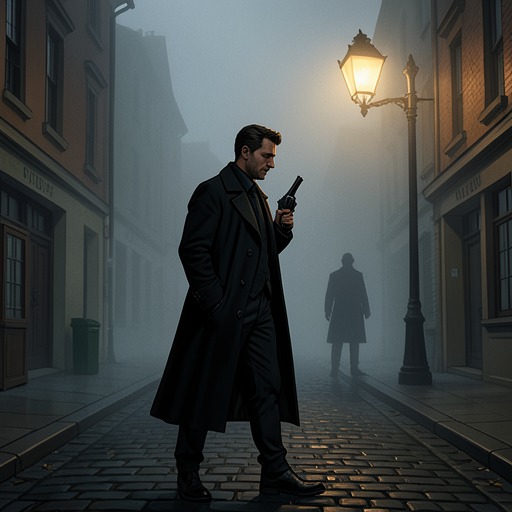
The trial followed a shooting in Lambeth on the early morning of 17 February 1872. Three revolver shots, perhaps four, broke the relative quiet shortly after two o’clock; the sound was so unusual in London that police constable Henry Tarrant recognized it and ran towards Belvedere Road. The victim was George Merrett, a working-class man whose death left his pregnant wife, Eliza, and six young children.
The proceedings took place at Kingston Assizes because the area remained within Surrey’s jurisdiction, rather than London’s. In early April, more than twenty witnesses appeared before the Lord Chief Justice. The trial therefore addressed both the act itself and a question of criminal responsibility: whether Minor had understood his conduct, or had killed while under a delusion that made him legally insane.
Evidence of delusion and the verdict
The court heard that Minor had already brought his fears to the attention of the police. A Scotland Yard detective testified that Minor had complained of men entering his room at night to poison him, and had attributed the imagined plot to Fenians. Minor had also continued to write to the detective, describing fears of being drugged and murdered. These reports made his illness visible not as an explanation invented after the killing, but as a pattern of persecution fears that had been expressed beforehand.
Minor’s landlady and stepbrother supplied further evidence. His landlady described his fear of Irish people and his anxiety that intruders might enter his lodging. His stepbrother recalled similar accusations during Minor’s stay with the family in New Haven, including fears that people were entering his room and poisoning or molesting him. Minor had connected these experiences to an act he believed he had been forced to commit in the United States Army, and had hoped that going to Europe would allow him to escape his persecutors. The landlady disputed that anyone could have entered her house at night, but her account of Minor’s persistent fears reinforced the evidence of delusion.
Minor sat in the dock, described in the account as morose and ashamed. His lawyer argued that he was insane; the Lord Chief Justice agreed that the jury should apply the M'Naghten Rules, which concerned criminal responsibility rather than whether the killing had occurred. If the jury accepted that Minor was of unsound mind and had acted under a delusion, it was to return a verdict of not guilty on grounds of insanity. Late on 6 April, without deliberation, the jury did so. In this legal sense Minor was acquitted, although the narrative stresses that the killing itself was known to both the court and Minor.
Sentence and consequences
The verdict left the judge to determine custody. He ordered Minor detained in safe custody until the Crown decided otherwise, a sentence that placed the duration of confinement outside an ordinary fixed term. The Home Department then arranged for his transfer from temporary custody in Surrey to Broadmoor Asylum, the new institution for the criminally insane at Crowthorne. He was recorded there as Patient Number 742 and held in continuing custody.
That disposition had consequences far beyond the courtroom. Minor’s confinement placed him in circumstances where he could devote years to reading and contributing quotations to the dictionary being compiled by James Murray. The book eventually became a lasting memorial to Minor’s scholarship, but that legacy began with a murder and with a verdict shaped by mental illness; it cannot make the violence or its human cost incidental.
Later accounts and the unequal afterlife
The trial’s consequences also became entangled with a later story about Minor and Murray. In 1915, journalist Hayden Church published a sensational account in which Murray supposedly arrived at Broadmoor expecting to visit a fellow scholar and only then discovered that his correspondent was an imprisoned murderer. The book identifies that first-meeting scene as an amusing and romantic fiction. Murray’s letter to Francis Brown gives a less theatrical account: he had begun corresponding with Minor around 1880 or 1881, and their first meeting took place in January 1891, after Murray sought permission to visit him. They subsequently met regularly for almost twenty years. The correction matters because the legend turned the consequences of the trial into a dramatic literary anecdote, while the documented relationship grew through correspondence and sustained scholarly work.
The afterlife of the killing was unequal. Minor died in 1920 and was buried in the family plot at Evergreen Cemetery; his grave has a small, plain sandstone marker. Merrett’s grave at Tooting Cemetery has no marker, only a patch of discoloured grass. The dictionary preserved Minor’s contribution on a vast scale—he supplied tens of thousands of quotations—but offered no comparable public remembrance of the man he killed. The trial thus stands at the junction of legal judgment, illness, scholarship, and a lasting imbalance in whose life the story remembers.